Roof Replacement in Astoria & Queens, NY
At some point, every roof reaches the end of what a repair can reasonably fix. Maybe it’s a pre-war Astoria roof that’s original to a building built before the Second World War. Maybe it’s a flat commercial roof that’s been patched in six different spots over six different years and needs to stop being patched. Maybe a storm did enough damage in one event that a full replacement is simply the more sensible path forward. When that point arrives, you need a roofing company that installs new roofs correctly the first time — not one still thinking in terms of patches.
We’ve been installing new roofs across Queens on private homes, multi-family buildings, and commercial properties. A full replacement is a bigger commitment than a repair, in cost and in disruption, and we treat it that way — with a clear process, real material options, and straightforward answers about what your building actually needs.

Signs Your Roof Needs Replacement, Not Just Repair
A repair makes sense when the problem is isolated. Replacement becomes the better option when:
- Wear is spread across the whole roof surface, not concentrated in one area
- The roof is at or past the expected lifespan for its material — roughly 20–25 years for asphalt shingles, 15–25 years for most flat membrane systems depending on type
- You’ve had repeated repairs in different spots over the past few years, with new issues appearing faster than old ones get fixed
- There are already multiple layers of shingles on the roof, ruling out another overlay
- Decking underneath shows rot or soft spots once a repair crew opens it up
- Storm damage affects a large enough percentage of the roof that patching piece by piece no longer makes financial sense
If you’re not sure which category you’re in, that’s exactly what a proper inspection is for — and we’ll always tell you honestly if a repair is still the better call. We don’t make more money by talking every borderline case into a full replacement, and we’d rather earn a repeat customer over the life of their roof than push an unnecessary project once.
Our Services
Get In Touch
Roofing Materials We Install
The right material depends heavily on your building type. For private homes and row houses, architectural asphalt shingles are the most common choice, offering a strong balance of cost, durability, and appearance, with standard three-tab shingles as a more budget-focused option. For flat roofs on multi-family and commercial buildings, we install full new systems in TPO, EPDM, or modified bitumen, chosen based on building use, budget, and how the roof will be accessed and maintained going forward. Metal roofing is also an option for owners looking for a longer lifespan and are willing to pay more upfront for it. Proper attic or roof deck ventilation is part of every replacement too — it’s easy to overlook, but poor ventilation shortens the life of any roofing material by trapping heat and moisture underneath it. We’ll walk through the real trade-offs of each material for your specific property, not just push whatever’s easiest to install.
Why We Do Full Tear-Off, Not a Roof-Over
Some contractors offer to install new shingles directly over an existing layer to save time and cost. We don’t recommend it, and in most cases in NYC it isn’t even allowed once a roof already has multiple layers. A roof-over traps moisture between layers, hides the condition of the decking underneath, and often voids material warranties. A full tear-off costs more upfront, but it’s the only way to actually inspect and repair the decking, install proper underlayment and ice-and-water protection, and give the new roofing material a flat, stable surface to perform the way it’s supposed to. On a building that’s going to carry that roof for another 20-plus years, starting from a clean deck matters.
The Roof Replacement Process, Start to Finish
- Inspection and proposal. We assess the existing roof and decking, discuss material options, and provide a detailed written proposal.
- Permitting. Full roof replacements in NYC typically require a Department of Buildings permit. We handle the permitting process, along with any sidewalk shed or scaffolding requirements for taller multi-family buildings.
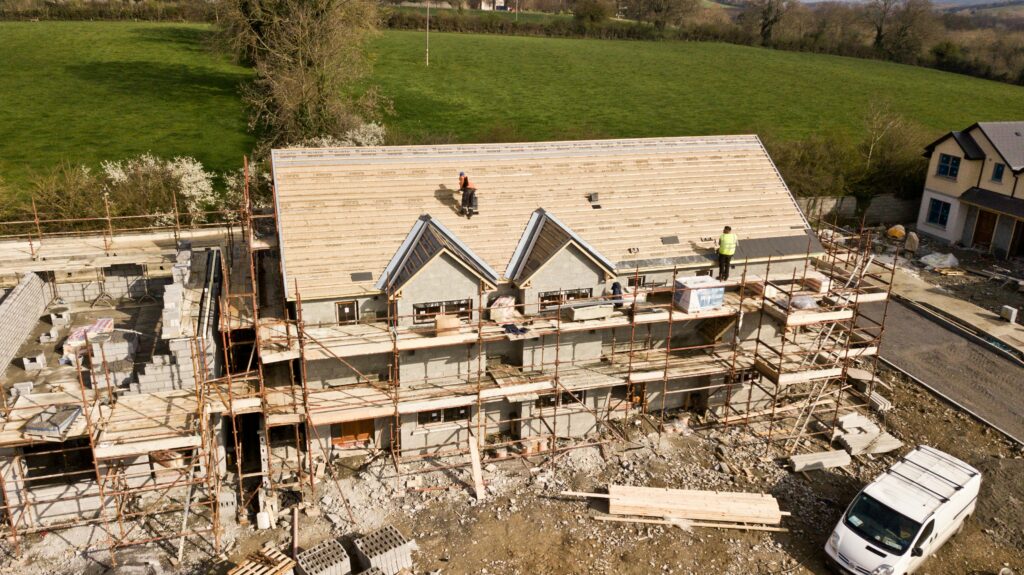
- Tear-off. Existing roofing layers come off down to the deck, which we inspect for rot or damage and repair as needed before anything new goes on.
- Installation. New underlayment goes down first, with ice-and-water shield at eaves and valleys — important protection against Queens’ winter freeze-thaw cycles — followed by the new roofing material installed to current code.
- Cleanup and magnetic nail sweep. On dense Queens lots with cars parked close to the building and neighbors just feet away, thorough cleanup isn’t optional — we sweep the property for debris and stray fasteners before we consider the job done.
- Final walkthrough and warranty documentation. You’ll get a full explanation of the work performed and the warranty coverage on both materials and labor.
How Long Does a Roof Replacement Take?
A typical single-family or two-family home replacement usually takes one to three days, weather permitting. Larger multi-family buildings or commercial roofs can take longer, depending on square footage and the complexity of the existing roof structure. We’ll give you a realistic timeline as part of your proposal, including how weather delays would be handled.
Replacement Considerations Specific to Queens Properties
Replacing a roof in Queens comes with a few local wrinkles that don’t apply everywhere. Attached and semi-attached row houses mean tear-off and material staging often has to be coordinated carefully to avoid affecting a neighbor’s property — dumpsters, material delivery, and even ladder placement can require some negotiation on a tight block. Taller multi-family buildings may require sidewalk sheds or scaffolding permits before work can even begin. And if your property sits within a landmarked area — including districts like Jackson Heights Historic District or Sunnyside Gardens Historic District — exterior work, including roofing material and appearance, may need Landmarks Preservation Commission approval before a permit is issued. We’re familiar with these requirements and factor them into your timeline from the start, rather than discovering them halfway through the project.
New Roof Cost Factors
Roof replacement cost depends on several factors: the size and pitch of the roof, the material selected, how many existing layers need to be torn off, whether decking repairs are needed once the old roofing comes up, and site accessibility for material delivery and dumpster placement on a tight urban lot. Landmarked properties may also carry additional cost from required materials or LPC-approved specifications. Every project starts with a free, detailed estimate so you know the full cost before committing.
Financing and Insurance for Roof Replacement
A full roof replacement is a significant expense, and we’re happy to discuss financing options if paying the full cost upfront isn’t the right fit — including payment plans that break the cost into manageable installments. If your replacement is being driven by storm damage rather than age, your homeowners or building insurance may cover some or all of the cost — we can provide documentation of the damage and existing condition to support a claim, though final coverage decisions are always up to your insurer.
Why Queens Property Owners Choose Us for Roof Replacement
- Installing new roofs across Queens
- Experienced with NYC DOB permitting and Landmarks Preservation Commission requirements
- Manufacturer-certified installation on major shingle and membrane systems
- Material and workmanship warranties on every replacement
- Careful project management on tight, densely built Queens lots
Queens Areas We Serve
Based in Astoria, we install new roofs throughout Long Island City, Sunnyside, Woodside, Jackson Heights, Elmhurst, Corona, Forest Hills, Middle Village, Maspeth, and Ridgewood.
Schedule Your Free Roof Replacement Estimate
If your roof is nearing the end of its life or repairs have stopped making sense, contact us for a free, no-pressure inspection and a clear proposal for what a full replacement would involve.
Frequently Asked Questions
What's the average lifespan of a roof before it needs replacement?
It depends heavily on material. Standard asphalt shingles typically last 20–25 years, architectural shingles somewhat longer, and flat membrane systems generally 15–25 years depending on type and maintenance. Age alone isn’t the only factor — a well-maintained roof can outperform its expected lifespan, while a poorly maintained one can fail earlier.
Do I need a permit to replace my roof in Queens?
In most cases, yes. Full roof replacements in NYC typically require a Department of Buildings permit, and taller buildings may also need scaffolding or sidewalk shed permits. We handle this process as part of every replacement project.
How long does a full roof replacement take?
Most single-family and two-family homes are completed in one to three days. Larger multi-family or commercial buildings take longer depending on size and complexity. We’ll give you a specific timeline with your written proposal.
Can you replace my roof if my property is in a landmarked historic district?
Yes. We’re experienced working within Landmarks Preservation Commission requirements for districts like Jackson Heights and Sunnyside Gardens, including material and appearance approvals, and we build that process into your project timeline.
What roofing material holds up best to Queens weather?
Architectural asphalt shingles are a strong, cost-effective choice for most pitched residential roofs here, offering good wind and impact resistance. For flat roofs, TPO and EPDM both perform well against ponding and UV exposure when properly installed and maintained. We’ll recommend the best fit based on your specific building and budget.
Will my insurance cover a full roof replacement?
If the replacement is driven by covered storm damage, many policies will cover some or all of the cost. Replacement due to normal age and wear typically isn’t covered. We can provide documentation to support a claim, but coverage decisions come from your insurer