
Flat Roof Repair in Astoria & Queens, NY
Queens has more flat roofs than almost any other part of New York City, and there’s a reason for that. Rear additions on Sunnyside and Woodside row houses are flat. The taxpayer-style retail buildings lining Steinway Street, Broadway, and Roosevelt Avenue are flat. Apartment building rooftops across Jackson Heights and Elmhurst are flat, and so are most of the industrial and warehouse buildings around Long Island City and Maspeth. If you own property in this borough, there’s a good chance at least part of your roof is low-slope — and low-slope roofs fail differently than the pitched, shingled roofs most repair companies are used to thinking about.
We’ve been repairing flat roofs across Queens on everything from EPDM rubber membranes over three-family homes to torch-down modified bitumen on commercial storefronts. A flat roof repair isn’t just a smaller version of a pitched roof repair — it requires understanding drainage, membrane behavior, and seam integrity in ways a shingle repair never touches. That’s the work we specialize in.
Why Flat Roofs Need a Different Repair Approach
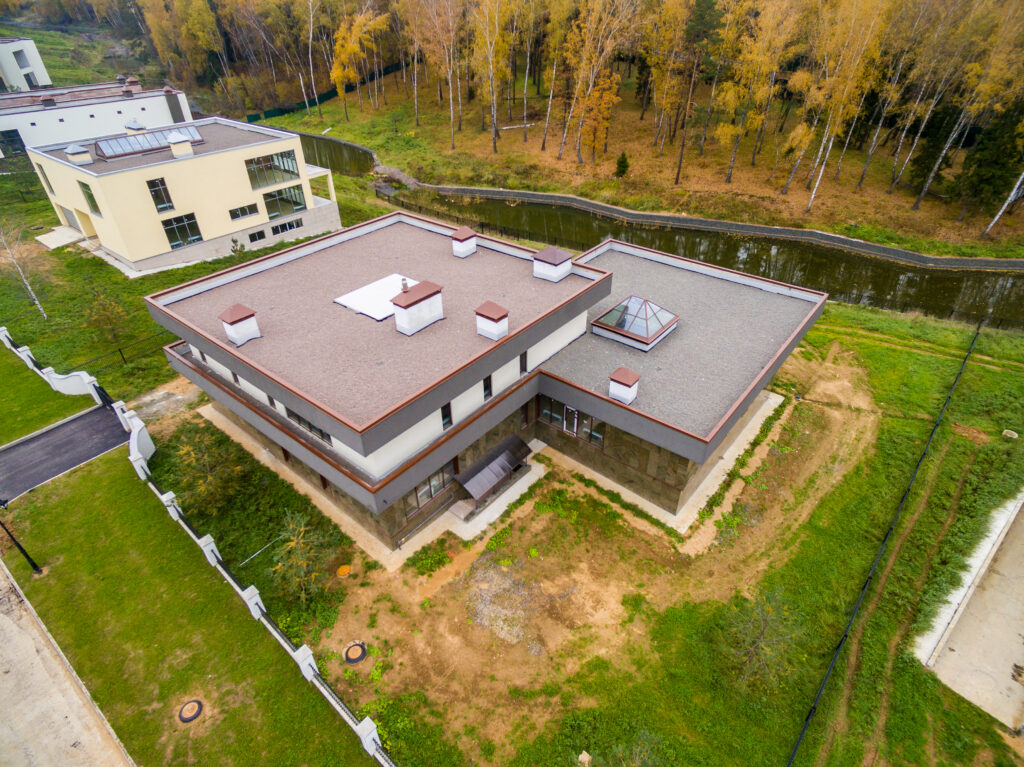
A pitched roof sheds water by design. A flat, or low-slope, roof relies on a slight pitch, properly placed drains, and an intact membrane to move water off before it becomes a problem. When any one of those fails — a clogged drain, a low spot in the membrane, a cracked seam — water doesn’t run off, it sits. And sitting water finds every weak point eventually. Add in foot traffic from building maintenance, HVAC units and satellite mounts anchored directly into the membrane, and parapet walls that trap debris, and you’ve got a roofing system with far more potential failure points than a simple pitched roof. Diagnosing a flat roof leak correctly means understanding all of this, not just patching the spot where water happens to be dripping through the ceiling below.
Our Services
Get In Touch
The Flat Roof Systems We Repair
Queens buildings use a mix of flat roofing systems, and each one fails — and gets repaired — differently:
- EPDM (rubber membrane): Common on multi-family homes and apartment buildings. Repairs typically involve seam resealing, patching punctures, and addressing shrinkage at the edges.
- TPO and PVC (heat-welded membranes): Increasingly common on newer construction and commercial reroofs. Repairs require heat-welding technique to properly bond new material to old.
- Modified bitumen (torch-down): Widely used on Queens taxpayer-style commercial buildings. Repairs involve patching with matched cap sheet and resealing laps and edges.
- Built-up roofing (tar and gravel): Still found on older Queens buildings. Repairs typically mean addressing cracked or alligatored surfaces and resealing flashing details.
We carry materials and technique for all four, because a repair using the wrong material or method on the wrong membrane type tends to fail again within a season.
Signs of Flat Roof Damage
Flat roof problems often show up differently than a pitched roof leak. Watch for:
- Water pooling on the roof more than 24–48 hours after rain
- Bubbling, blistering, or soft spots in the membrane
- Seams that have separated or lifted at the edges
- Cracked, brittle, or alligatored surface material
- Rust or gaps in flashing around parapet walls or roof edges
- Interior ceiling stains directly beneath flat roof sections
- Failed patches from a previous DIY or temporary repair
Because flat roofs are walkable, a lot of this damage is visible on a simple rooftop walkthrough — which is exactly where every inspection starts.
Common Flat Roof Repairs We Perform
- Seam resealing and re-welding on EPDM, TPO, and PVC systems
- Membrane patching for punctures, blisters, and localized wear
- Parapet wall flashing repair, one of the most common flat roof leak sources in Queens
- Drain and scupper clearing and repair, addressing the root cause of ponding
- Reflective coating and recoating, extending membrane life and improving energy efficiency
- Penetration resealing around HVAC units, vent stacks, and satellite or antenna mounts
Ponding Water: Not Always an Emergency, But Never Ignore It
Ponding water is the single most common concern we get called out for on Queens flat roofs. A little standing water right after a heavy rain is normal — most membranes can handle that briefly. Water that’s still sitting after 48 hours is a different story. It usually points to a clogged or undersized drain, a low spot from age-related settling, or a slope that was never quite right to begin with. Left alone, ponding accelerates membrane breakdown and turns small seam issues into active leaks. We check drainage as a standard part of every flat roof inspection, not just the spot where a leak has already shown up inside.
Rooftop Equipment and Access in Queens Buildings
A lot of Queens apartment buildings use their rooftops for more than shelter — HVAC condensers, satellite dishes, cable runs, and building maintenance access are all common. Every one of those is a penetration point in the membrane, and every bit of foot traffic adds wear that a roof over a single-family home simply doesn’t see. When we repair a flat roof with active rooftop equipment, we make sure the fix accounts for continued access and use, not just the leak in front of us — otherwise you’re paying for the same repair again next year.
Seasonal Flat Roof Issues in Queens
Flat roofs react to the seasons differently than pitched roofs, and Queens’ weather swings hard between them. In winter, snow and ice can back up at drains and scuppers, especially on roofs with parapet walls that trap runoff — that backup is a common source of interior leaks that only show up during a thaw. In summer, direct UV exposure and heat cycling cause membranes to expand and contract repeatedly, which is what eventually leads to blistering and seam fatigue, particularly on older EPDM and built-up systems that have had years of sun exposure. Spring and fall storm season brings the heaviest rain volume, which is when marginal drainage issues that were fine in a light rain finally get exposed. Knowing which season caused which type of damage helps us diagnose the actual root issue instead of just resealing the symptom.
Our Flat Roof Repair Process
- Rooftop inspection, checking the full membrane, all penetrations, drains, and parapet flashing — not just the reported leak location
- Written estimate outlining the cause, the repair method, and materials matched to your existing system
- Repair performed using manufacturer-appropriate technique — heat-welding, torch-down, or adhesive seaming, depending on your membrane type
- Drainage check to confirm water is moving off the roof correctly after the repair
- Documentation of the completed work, useful for building records or insurance purposes
What Flat Roof Repair Typically Costs
Costs depend on membrane type, the extent of the damage, and roof accessibility — a rowhouse rear addition is a very different job than a multi-story apartment building roof. Small seam or puncture repairs are generally the most affordable; drainage corrections, larger membrane sections, or extensive parapet flashing work run higher. Torch-down and heat-welded repairs also tend to cost more than adhesive EPDM patching, simply because of the equipment and technique involved. Every job starts with a free inspection and a written estimate, so you’ll know the cost before any work begins.
Why Queens Property Owners Choose Us for Flat Roof Repair
- Serving Queens flat roofs from residential additions to commercial buildings
- Trained and equipped for EPDM, TPO, PVC, modified bitumen, and built-up systems
- Drainage-first diagnosis, not just surface patching
- Repairs planned around continued rooftop equipment and access where needed
- Workmanship warranty on completed repairs
Flat roof work isn’t a side specialty for us — it’s a large share of what we do, because it’s a large share of what Queens has. That matters when something goes wrong: a crew that mostly repairs pitched shingle roofs and only occasionally sees a flat one is more likely to misdiagnose a drainage issue as a membrane failure, or vice versa. Ours doesn’t.
Queens Areas We Serve
Based in Astoria, our flat roof repair crews regularly work throughout Long Island City, Sunnyside, Woodside, Jackson Heights, Elmhurst, Corona, Maspeth, and Ridgewood — anywhere Queens’ mix of residential, commercial, and industrial flat roofs needs attention.
Schedule a Flat Roof Inspection
Standing water, a soft spot underfoot, or a stain spreading across a ceiling below a flat section are all worth a look before they get worse. Contact us for a free inspection and a straightforward assessment of what’s going on.
Frequently Asked Questions
How long does a flat roof repair typically last?
A properly diagnosed and executed repair — one that addresses the actual cause, not just the visible symptom — should hold for several years, depending on the age and condition of the rest of the membrane. Repairs on a roof nearing the end of its overall service life may hold for a shorter window, which we’ll flag during the inspection.
Is standing water on my roof always a problem?
Not immediately. Most flat roofs can handle water sitting for a day or so after heavy rain. Water still standing after 48 hours usually points to a drainage or slope issue that’s worth addressing before it accelerates membrane wear.
How do you decide between patching a membrane and replacing a section of it?
It comes down to how much of the membrane is compromised and how it’s failing. An isolated puncture or a single lifted seam is almost always patchable. Widespread blistering, brittleness across large areas, or repeated failures in the same zone usually mean a section replacement is the more durable fix — we’ll explain which situation you’re in and why.
Do flat roofs need more maintenance than pitched roofs?
Generally, yes. Drains need to stay clear, seams should be checked periodically, and any rooftop equipment needs its surrounding flashing inspected. A little regular attention goes a long way toward avoiding emergency repairs.
Can you repair a flat roof that has HVAC units, satellite dishes, or regular foot traffic on it?
Yes — this is common on Queens apartment buildings and commercial properties. We repair around active rooftop equipment and access points, and we make sure the fix holds up under continued use, not just in ideal conditions.
Do you repair flat roofs on commercial and industrial buildings, or just residential?
Both. We work on flat roofs across residential rear additions and multi-family buildings as well as commercial storefronts and industrial buildings throughout Queens.