Roofing in Woodside, Queens
Woodside covers more range in building scale than almost anywhere else we work in Queens. On one block, a surviving 19th-century wood-frame house with a steep traditional roofline. A few streets over, standard brick multi-family homes from the borough’s early-20th-century building boom. And rising above much of the neighborhood, the six 16-story towers of Big Six, one of the largest Mitchell-Lama cooperative developments in this part of the city. We’ve worked across that entire range as part of our regular Queens service area, and Woodside is one of the neighborhoods where the construction type genuinely changes the approach block to block; a job here rarely looks the same twice.

A Neighborhood Built in Layers
Woodside developed earlier than several of its neighboring communities, starting as a streetcar suburb in the second half of the 1800s, well before the brick row house boom that shaped much of western Queens in the 1920s. That earlier development means some of the borough’s oldest surviving wood-frame houses are still standing here, sitting alongside later waves of brick construction and, eventually, mid-century high-rise development that arrived with the postwar housing programs of the 1960s. Roofing in Woodside means working across all of these eras, sometimes on the same block, and recognizing which approach applies to which building rather than treating every job the same way. A crew that only knows how to work on one construction type is going to misjudge a fair number of jobs in a neighborhood built this unevenly.
Our Services
Get In Touch
Woodside's Wood-Frame Houses: A Different Kind of Roofing Challenge
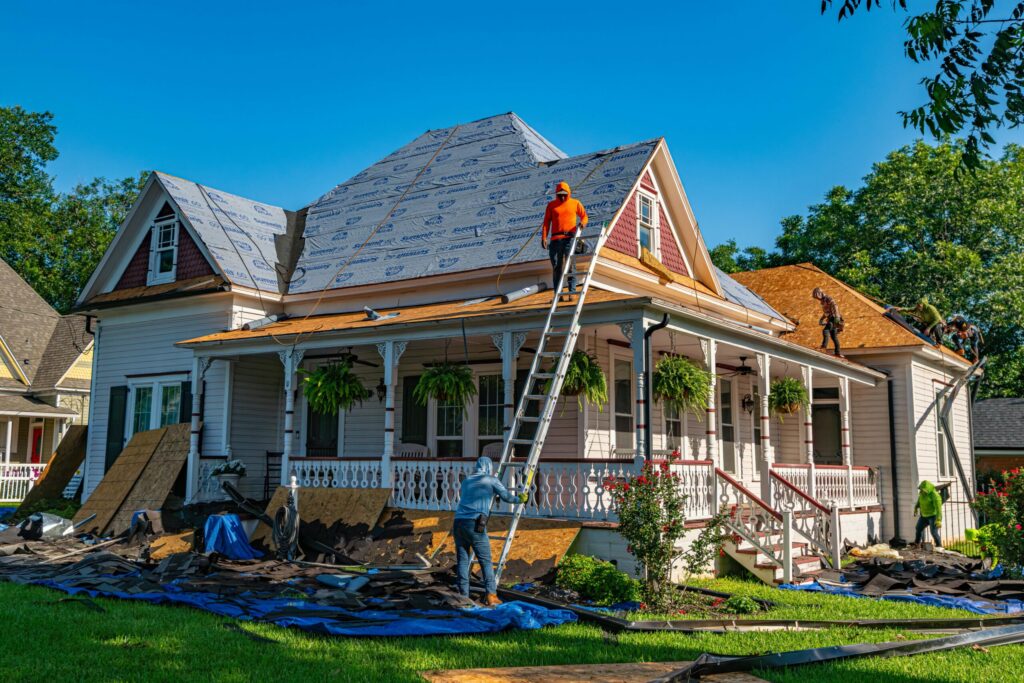
Unlike the brick party-wall construction common through most of western Queens, some of Woodside’s oldest houses are true wood-frame construction: detached or semi-detached, often with steeper traditional roof pitches, and roof decking and structural framing that behaves differently than what we see on later brick construction. A century or more of settling and structural movement is common on houses this old, which means flashing and roofline irregularities here are sometimes the result of the house itself shifting slightly over decades rather than a straightforward material failure. Because these houses are more often fully detached rather than sharing a party wall, there’s also more total roof surface exposed on all sides, which changes how we approach ventilation, flashing at multiple roof planes, and overall material coverage compared to a standard attached row house repair. Diagnosing a leak on one of these homes often means understanding the framing underneath, not just the visible roofing surface; a stain in one room can trace back to a point on the roof several feet away once you account for how water travels along old wood framing.
Common Roofing Issues We See in Woodside
The variety in construction type here means the common problems vary block to block as much as the buildings themselves. On wood-frame houses, we frequently find moisture-related wear in decking and framing that’s gone unaddressed for years, since it’s less visually obvious than a cracked shingle or a torn membrane. On standard brick multi-family homes, the issues tend to look like what we see throughout the rest of western Queens: aging flashing, worn gutters, and the occasional deferred repair. On larger buildings like Big Six Towers, the concerns shift toward drainage at scale, membrane seam integrity across a much larger roof area, and coordinating access for a building with dozens of residents rather than one owner. And near the Woodside transit junction, transit-related vibration shows up as accelerated flashing and fastener wear regardless of which building type it’s affecting.
The Big Six Towers and Woodside’s Mitchell-Lama Co-ops
Big Six Towers is a defining feature of Woodside’s skyline: six 16-story residential towers built in the early 1960s, originally developed as an affordable cooperative for members of IBEW Local 3, the electrical workers’ union, under New York’s Mitchell-Lama housing program. It’s a genuinely unusual building type for this part of Queens, and roofing work here looks nothing like a row house repair. These are large-scale flat roofs at real height, requiring different safety protocols, different equipment for material access, and coordination with a cooperative board rather than a single homeowner or even a typical condo association. Board-governed buildings like this usually need a formal written proposal, a clear cost breakdown, and documentation suited to board review and approval, not just a handshake estimate. Scheduling also tends to be more involved; securing roof access on a building this size means coordinating with building staff, working within whatever elevator or freight access windows are available, and planning around a much larger and more occupied structure than a typical residential job.
A Major Transit Junction: 7 Train and LIRR
Woodside is one of the few places in Queens where the elevated 7 train and the Long Island Rail Road meet, with Woodside station serving as a transfer point between subway and commuter rail. That combination means buildings near the station deal with a more layered mix of vibration and debris exposure than areas served by just one or the other: the steady rhythm of subway service plus the heavier, less frequent but more substantial passage of LIRR trains, which run on a different schedule and carry a different kind of mechanical load than a standard subway car. On roofs close to this junction, we pay particular attention to flashing and fastener condition, since the cumulative vibration here tends to be more pronounced than in quieter parts of the neighborhood, and it’s a factor worth mentioning to us directly if your property sits within a block or two of the station.
Roofing Along Roosevelt Avenue
Roosevelt Avenue runs through Woodside as one of its commercial spines, lined with retail storefronts and mixed-use buildings beneath the elevated tracks. As with any transit-adjacent commercial corridor, flat roofs here deal with the combined wear of overhead train vibration and heavy street-level activity, and we schedule repairs around business hours wherever possible to minimize disruption to the stores operating below. Many of these buildings share the same drainage and membrane concerns we address on other Queens commercial corridors, but the specific mix of tenants and building ages along this stretch means each storefront often needs its own honest assessment rather than a one-size answer for the whole block.
Building Types in Woodside
Wood-frame houses, among the oldest surviving residential construction in this part of Queens
Brick multi-family homes, from the borough’s broader early-20th-century development boom
Mitchell-Lama cooperative towers, most notably the Big Six Towers development
Retail and mixed-use buildings, concentrated along Roosevelt Avenue and near the Woodside transit hub
Why Woodside Residents Choose Us
Real experience with wood-frame construction, a less common roofing challenge in this part of Queens
Comfortable working at scale on large cooperative buildings like Big Six Towers, including board documentation
Attention to the combined wear near Woodside’s 7 train and LIRR junction
Familiarity with standard brick multi-family homes throughout the rest of the neighborhood
Part of our regular Queens service area
Few neighborhoods ask a roofer to move between such different building types in a single day, and that range is exactly what we’ve built our experience around here, whether that means walking a homeowner through a century-old attic or presenting a formal proposal to a sixteen-story co-op’s board.
Schedule Your Woodside Roofing Estimate
Whether you’re in one of Woodside’s older wood-frame houses, a standard brick multi-family, or working with a co-op board at Big Six Towers, contact us for a free inspection and a straightforward plan for what your roof needs.
Frequently Asked Questions
Do you work on wood-frame houses, or just brick construction?
Yes, we work on both. Wood-frame roofing involves different structural and ventilation considerations than brick multi-family construction, and we approach each according to what the specific building actually needs.
Do you handle roofing for large cooperative buildings like Big Six Towers?
Yes. We’re experienced with large-scale flat roof work on taller buildings, including the board documentation, written proposals, and formal approval processes that cooperative and condo boards typically require.
Does living near both the 7 train and LIRR affect roof maintenance needs?
It can. The combined vibration from subway and commuter rail service near Woodside’s transit junction tends to accelerate wear on flashing and fasteners compared to areas with less transit activity, which we account for during inspections in that part of the neighborhood.
Do you work with co-op boards on larger buildings in Woodside?
Yes. We regularly present formal proposals and documentation suited to board review, rather than a simple homeowner-style estimate, for buildings like Big Six and other Mitchell-Lama developments.
Is Woodside part of your regular service area?
Yes. It’s core territory for us, and we’re comfortable working across the full range of construction types the neighborhood includes.
My house is one of the older wood-frame homes; does that need different roofing materials?
Often, yes, or at least a different approach to installation. Wood-frame structures can have more structural movement over time than masonry construction, and we account for that during inspection and repair rather than assuming standard brick-construction methods apply directly.